
Blog
The Beginner’s Guide to JM Eagle HDPE Water Mains

Getting started with underground piping can feel like navigating a world of acronyms and technical jargon. For years, copper and ductile iron dominated the market, but modern infrastructure is moving toward high-density polyethylene solutions. Today, HDPE water main pipes are widely used in municipal, industrial, and residential projects because they balance durability with ease of installation.
If you’re curious about how they work and what makes them stand out, this guide is for you. As cities modernize their networks and property owners look for dependable solutions, these pipes are quickly becoming the standard. Their adaptability in various environments, coupled with impressive longevity, makes them a smart choice for forward-thinking communities. In short, they’re shaping the future of water infrastructure worldwide. Let’s dive in!
What is the HDPE pipe for water mains?
At first glance, polyethylene piping looks straightforward — a lightweight, flexible black or blue tube. But beneath the surface, there’s far more going on. To understand its role in water delivery, you’ll want to know what sets it apart from other materials and why municipalities are steadily adopting it for large-scale distribution projects. Let’s break down the key characteristics that make them stand out.
Strong and long-lasting
High-density polyethylene is engineered to resist cracking, rusting, or degrading when exposed to chemicals and soil conditions. Unlike metal pipes that corrode over time, this material stays intact, even when buried underground for decades. That longevity is a big reason cities and developers see it as a worthwhile investment.
Secure joints
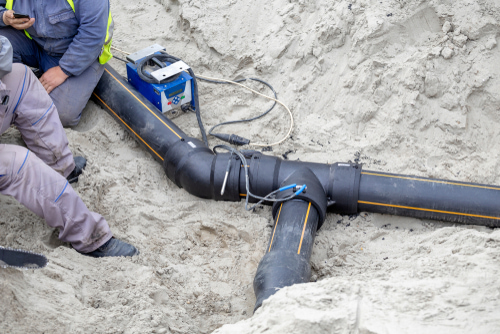
Instead of relying on mechanical fittings, HDPE systems use heat fusion to connect segments. This creates a seamless run of pipe with no gaps for leaks to form. Utilities appreciate this because it reduces water loss and keeps contaminants out. Once the water service line is installed, proper care can result in decades of reliability.
Flexible installation options
One of the biggest draws is how adaptable the material is during installation. It can be laid using traditional trenches or modern trenchless techniques, such as horizontal directional drilling. This flexibility allows crews to minimize disruption in busy neighborhoods and speed up projects. Benefits during installation include:
- Fewer fittings are needed thanks to the pipe’s bend radius
Quicker handling because the pipe is lightweight - Reduced restoration costs for roads, sidewalks, and landscaping
Growing popularity
Municipalities and contractors alike are turning to polyethylene because it solves many long-standing infrastructure issues. From cutting down on leaks and reliable performance in freezing conditions to providing a service life that often exceeds 50 years, these pipes are quickly becoming the go-to standard for new and replacement water mains.
Are HDPE pipes safe for drinking water?
Certainly! The material is non-toxic and does not leach harmful chemicals into the supply. Its smooth interior surface also resists buildup and bacterial growth, helping maintain water quality over time. That means families and businesses can trust the water arriving at the tap remains clean, safe, and consistent.
Where to find a top-quality HDPE water main pipe near me?
At Blair Supply, we go above and beyond to provide high-quality products trusted by contractors and property owners who expect performance and long-term value. From durable water mains and high-density polyethylene sewer pipes to the accessories that keep systems running smoothly, we make it easy to get exactly what you need. With our experienced team on your side, you can consistently expect expert guidance and fast delivery, tailored specifically for your project. Reach out today!